⊕ Building
FRC Shooter Subsystem
State-space + Kalman filter tuning for Team 467's 2026 season. Lots of CSV staring.
I'm a junior at Shrewsbury High School in Massachusetts. I took apart my first RC car when I was seven and never got it back together, and I've basically been working my way up to bigger machines ever since. Right now that means a patent-pending 48V DC residential power system, a nonprofit I founded that runs tech workshops and e-waste drives across five towns, programming for FRC Team 467, and a phone-repair bench that pays for my parts habit.
FIND THE FRICTION.
PROTOTYPE THE SMALLEST
HONEST THING.
WATCH IT BREAK.
REBUILD UNTIL
IT OUTLASTS YOU.
Then I haven't finished it. I learned this the hard way with the nonprofit — the first workshops fell apart whenever I had a tennis match. So I wrote the curriculum down, trained six classmates to teach it, and now sessions run whether I'm in the room or not. I try to hold everything to that bar: if it needs me babysitting it, it's still a prototype.
Honestly, because the problems I keep running into are physical ones. The 48V idea started when I noticed almost everything in my house — laptops, LEDs, phone chargers — converts wall AC down to low-voltage DC, each with its own wasteful little brick. That's a wiring problem, not an app problem. I like software, I write plenty of it for FRC, but the projects I care most about have a screwdriver involved somewhere.
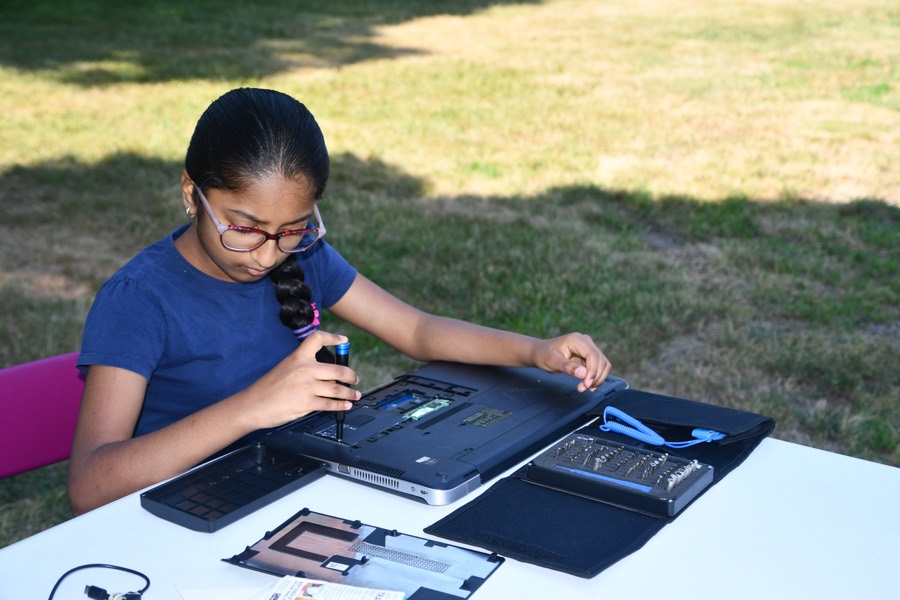
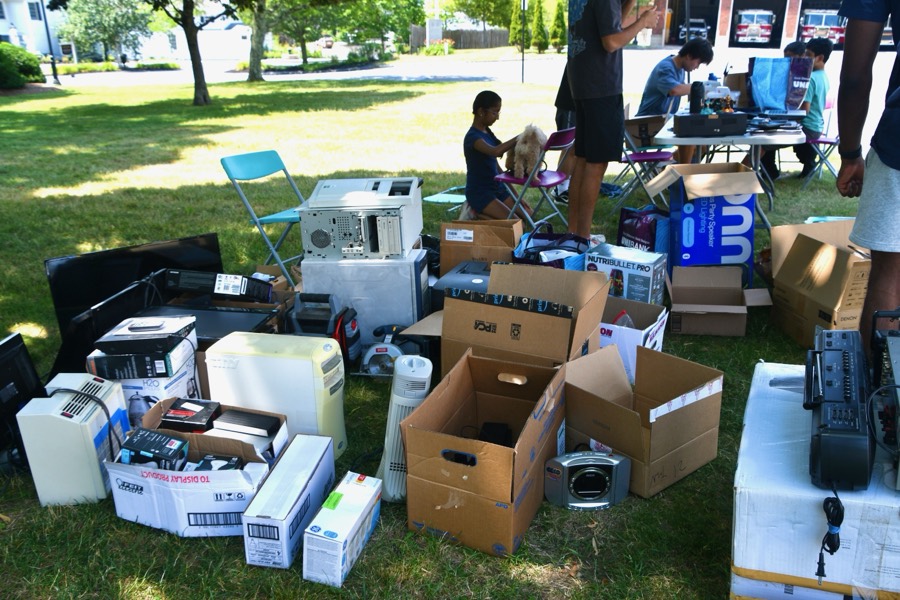
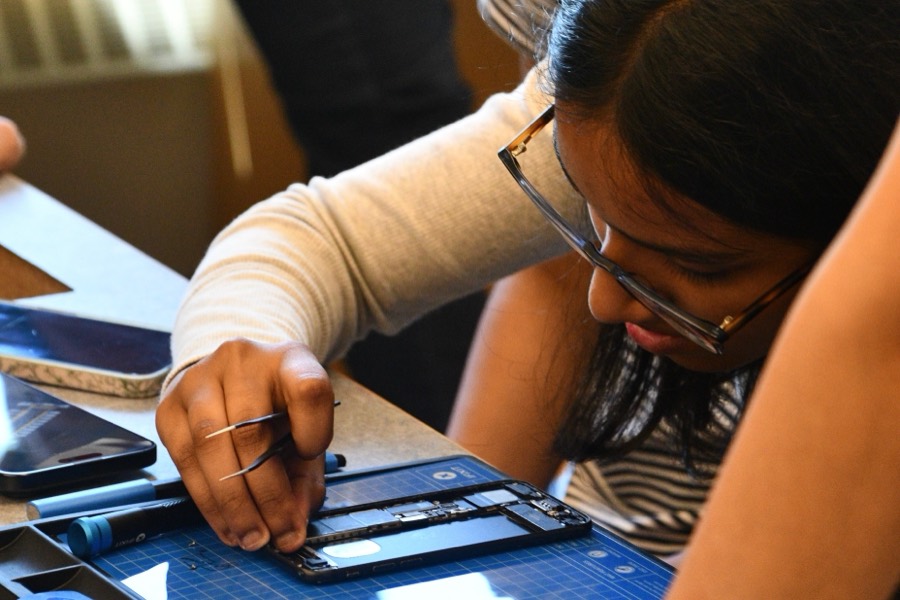
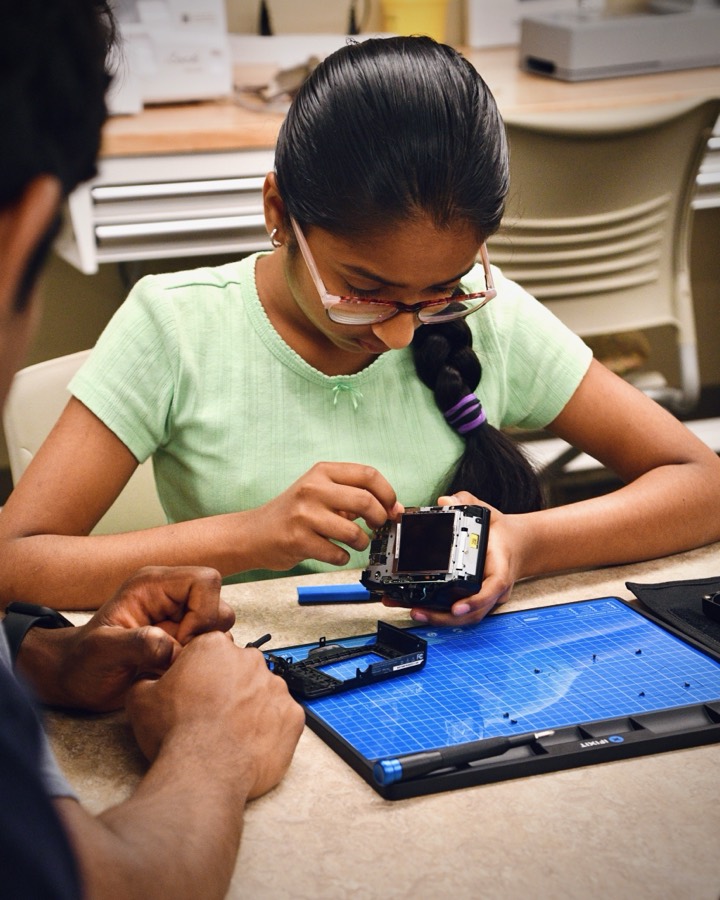
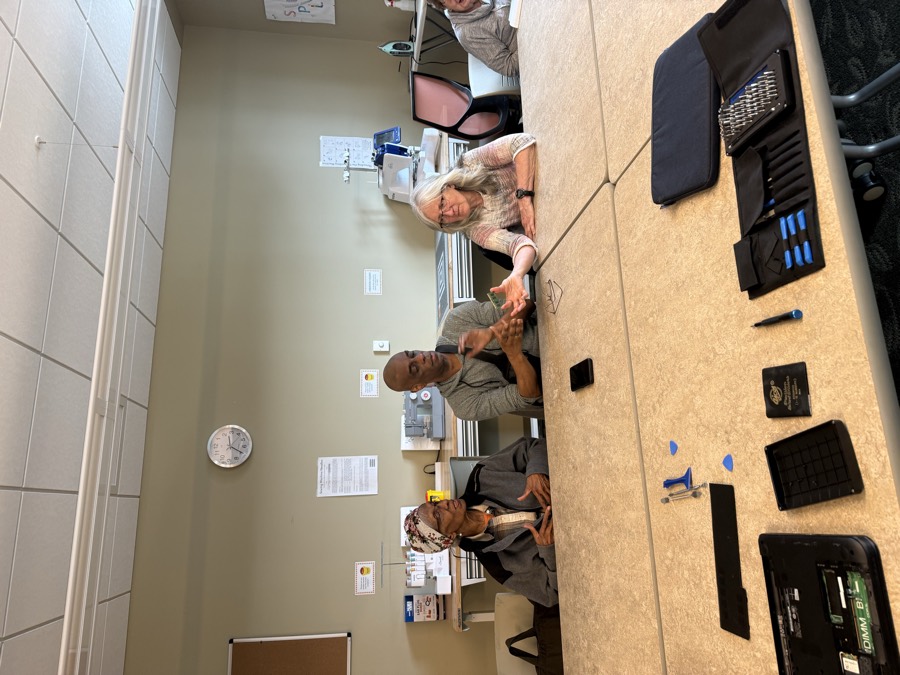
RC car, age seven, Phillips screwdriver from the garage. I got all four wheels off and most of the motor housing before my parents caught me, and I never did get it running again. But that order of operations stuck: open it first, understand it second, fix it third. It's how I ended up doing phone repairs, and it's why every broken laptop at our e-waste drives gets opened before it gets recycled.
I shrink the problem. When our shooter subsystem wouldn't converge last season, I stopped testing the whole robot and built a rig that spun just the flywheel, and the bad encoder showed up in an afternoon. Same thing with code, same thing with the nonprofit. If I can't isolate the failure, I'm not debugging — I'm guessing.
Engineering school — I want to study power electronics and controls properly instead of learning everything from datasheets and forum posts. Before that, I'm starting research at WPI in two labs this fall. Long-term, I'd like to work on how buildings use electricity. If you're a researcher or an engineer working on any of this, I'd genuinely like to hear from you — the contact page works.